(618)234-3630
905 West Blvd. Belleville, IL 62221

For operators of loaders, graders, haul trucks, and other heavy equipment, tires represent a significant investment. Whether you’re running new, used, repaired, or retread OTR tires, one of the simplest ways to maximize that investment is maintaining proper tire inflation.
Incorrect tire pressure can lead to premature wear, reduced performance, increased fuel consumption, and costly downtime. Understanding how proper inflation affects tire life can help equipment owners get the most value from their tires and avoid unnecessary replacement costs.
OTR tires are designed to carry specific loads at specific air pressures. When tires are inflated according to manufacturer recommendations, the tire’s footprint is distributed evenly across the ground, allowing the tread to wear properly and the tire to perform as intended.
When inflation pressures are too high or too low, the tire’s contact with the ground changes, creating uneven wear patterns and additional stress on the tire structure.
Underinflation is one of the most common causes of premature tire failure.
When an OTR tire is underinflated:
Over time, excessive heat can weaken internal tire components and reduce the chances that a tire can be successfully repaired or retreaded later.
For companies operating expensive earthmover tires or grader tires, underinflation can significantly shorten tire life and increase operating costs.
While underinflation often receives more attention, overinflation can also create serious problems.
When a tire is overinflated:
Overinflated tires can be particularly vulnerable on rocky construction sites, quarries, and mining operations where equipment regularly encounters sharp debris and uneven surfaces.
Maintaining correct air pressure helps distribute weight evenly across the tire tread.
Benefits include:
For fleets operating multiple machines, even small improvements in tire longevity can translate into significant savings over time.
Proper inflation doesn’t just help tires last longer—it can also protect the casing.
Many OTR tires are retreaded after the original tread wears down. However, tires that suffer severe casing damage from chronic underinflation may no longer qualify for retreading.
By maintaining proper air pressure throughout the tire’s service life, operators can improve the likelihood that the tire casing remains suitable for repair or retread, extending the overall value of the investment.
To maximize tire life:
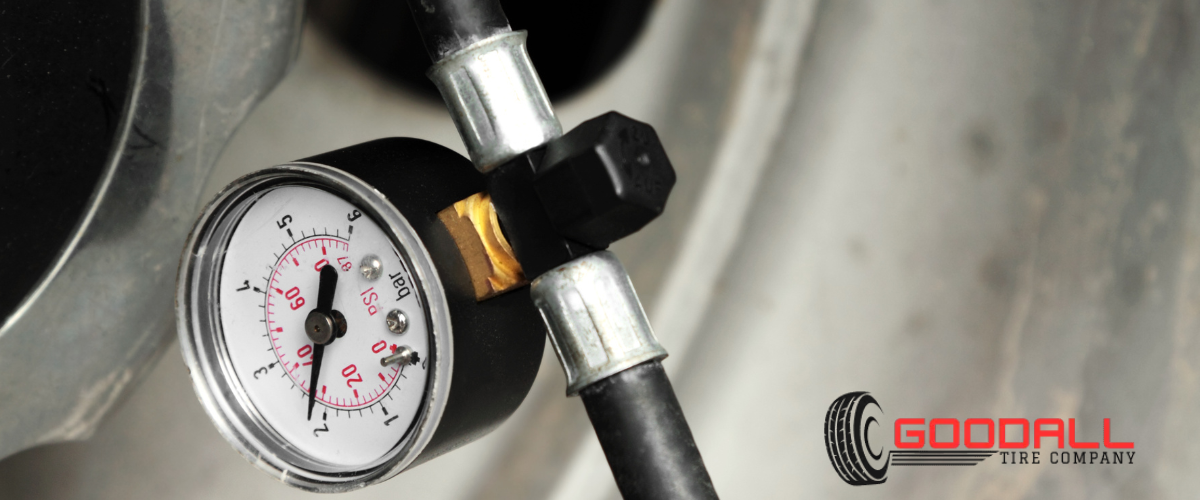
Pressure should be monitored as part of routine equipment inspections. Small pressure losses can become significant over time.
Always use inflation pressures recommended for the tire size, load, and operating conditions.
Equipment that regularly handles varying loads may require adjustments to maintain proper tire performance.
Cuts, punctures, valve issues, and rim damage can all contribute to pressure loss.
Operators are often the first to notice changes in ride quality, handling, or tire appearance that may indicate inflation issues.
Whether you’re operating graders, loaders, haul trucks, or other heavy equipment, proper tire inflation is one of the most effective ways to extend tire life and reduce operating costs. A consistent tire maintenance program can help prevent premature wear, improve equipment performance, and maximize the value of your OTR tire investment.
At Goodall Tire, we provide quality used, repaired, and retread OTR tires for customers across the United States. If you’re looking for reliable grader tires, loader tires, or earthmover tires, our team can help you find the right solution for your equipment and budget.